Mentions & evidence
A mention is one reference to a person, organization, or location in an article. A canonical record in Stylebook brings together the mentions that refer to the same real-world entity.
Each mention retains its evidence: the passage from which it came. This lets editors trace a record back to the reporting that supports it. A mention can also record the entity's role in that story.
See the Data model for how mentions relate to articles and canonical records.
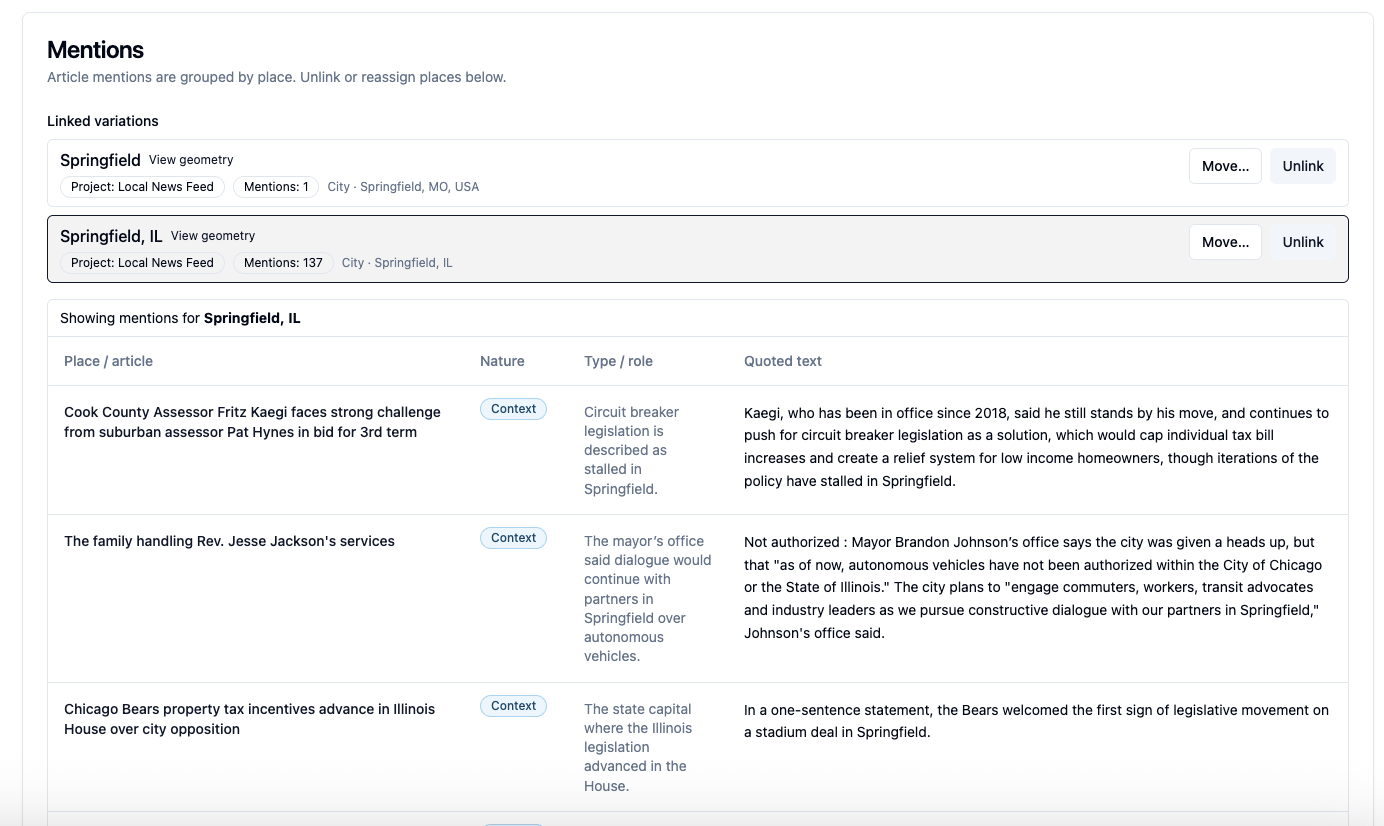
One entity can have several mentions
A person might be named in the opening paragraph, referred to by surname later, and quoted near the end. These are separate mentions of one article entity. Stylebook groups them under the linked canonical person and preserves the passages needed for review.
Story context belongs to the mention
A mention can describe the entity's role in that story—for example, whether a person is a subject, source, or quoted speaker. That context does not become a permanent property of the canonical person.
This is why “Jane Doe was quoted in this story” belongs to article evidence, while “Jane Doe is the mayor” may belong in canonical metadata.
Project scope
Mentions remain tied to their project and article even when several projects share a Stylebook. A project filter narrows the evidence shown on a canonical record; it does not create a separate version of the record.
Correcting a link
Editors can move or unlink evidence when it points to the wrong canonical record. This corrects the link without rewriting the source article or merging the canonical records.
When the final piece of evidence is removed from an otherwise empty canonical, Stylebook may offer to delete the empty record. Records with useful editorial metadata or other evidence should be reviewed before removal.